Air handling units, commonly called AHUs, are an important part of many heating, ventilation, and air conditioning systems.
They help manage indoor air by filtering, conditioning, circulating, and sometimes controlling the humidity of air before it enters occupied spaces.
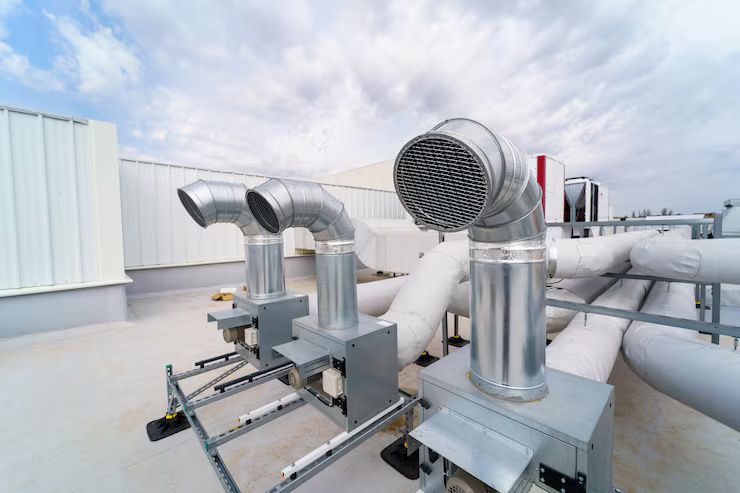
Although an air handling unit is often located away from the rooms it serves, its performance has a direct influence on indoor comfort, ventilation, air quality, and HVAC efficiency. AHUs are used across commercial buildings, hospitals, industrial facilities, educational institutions, airports, hotels, and other large indoor environments where controlled airflow is essential.
Understanding how an AHU works makes it easier to understand the broader operation of modern HVAC systems. This guide explains the main components, operating process, applications, maintenance considerations, and technologies shaping air handling systems.
What Is an Air Handling Unit?
An air handling unit is a mechanical device that conditions and distributes air throughout a building. It typically receives air from indoors, outdoors, or a combination of both, processes that air through several components, and then supplies it to occupied areas through ductwork.
The exact configuration depends on the building's requirements. A basic AHU may primarily filter and circulate air, while a more advanced system can regulate temperature, humidity, ventilation rates, and air cleanliness.
An AHU generally works as part of a larger HVAC installation rather than functioning as an independent heating or cooling system.
How an Air Handling Unit Works
The operating process can be understood as a sequence of airflow and conditioning stages.
First, air enters the AHU through an intake or return-air connection. Depending on the system design, outdoor air may be mixed with recirculated indoor air.
The air then passes through filters that capture particles and other airborne contaminants. After filtration, heating or cooling components adjust the air temperature according to the building's requirements.
Additional components may control humidity or improve air distribution. A supply fan then moves the conditioned air into the building through ductwork.
A simplified airflow process is:
Air intake → filtration → heating or cooling → humidity control → fan → supply ductwork → occupied space
Return air may subsequently travel back to the AHU, where it can be recirculated, exhausted, or mixed with fresh outdoor air.
Main Components of an AHU
Air handling units contain several interconnected components, each serving a specific purpose.
Filters
Filters remove airborne particles before air is distributed throughout a building. Filtration levels vary according to the application's requirements.
Regular filter inspection and replacement are important because clogged filters can restrict airflow and increase the workload placed on fans.
Heating and Cooling Coils
Coils transfer thermal energy to or from the airstream.
Cooling coils typically use chilled water or refrigerant-based systems to lower air temperature. Heating coils may use hot water, electricity, steam, or other heating sources.
Fans
Fans provide the airflow required to move conditioned air through the AHU and connected ductwork.
Fan selection and control influence airflow, noise, energy consumption, and overall system performance.
Dampers
Dampers regulate airflow between different sections of the system. They can control outdoor air intake, return air, exhaust air, and mixing ratios.
Modern systems may use automated dampers connected to building control systems.
Humidity Control Components
Some buildings require precise humidity management. AHUs may therefore incorporate humidification or dehumidification equipment to maintain suitable indoor conditions.
Heat Recovery Equipment
Heat recovery systems can transfer thermal energy between outgoing and incoming airstreams. This can help reduce the energy required to condition incoming outdoor air.
Different Types of Air Handling Units
AHUs can be configured in several ways depending on their application and installation environment.
| AHU Type | General Characteristics | Common Applications |
|---|---|---|
| Packaged AHU | Integrated components in one unit | Commercial buildings |
| Modular AHU | Configurable sections | Large facilities |
| Rooftop AHU | Installed outdoors or on roofs | Commercial properties |
| Fresh-Air AHU | Primarily processes outdoor air | Ventilation systems |
| Recirculating AHU | Uses a portion of return air | General HVAC applications |
| Custom AHU | Designed around specific requirements | Specialized facilities |
The appropriate configuration depends on airflow requirements, available space, environmental conditions, ventilation needs, and building design.
Why AHUs Matter in HVAC Operations
An air handling unit performs more than simple air circulation. It serves as a central point where several aspects of indoor environmental control can be managed.
Indoor Air Quality
Filtration and controlled outdoor-air intake help manage airborne particles and support healthier indoor environments.
Temperature Control
Heating and cooling components allow supply air to be conditioned before it reaches occupied areas.
Ventilation
AHUs can introduce outdoor air and remove stale air, supporting ventilation requirements.
Humidity Management
Appropriate humidity control can improve comfort and help protect building materials and equipment.
Air Distribution
Fans and ductwork allow conditioned air to reach multiple rooms and zones from a central system.
AHUs in Different Buildings
The design requirements of an AHU vary considerably between building types.
Commercial Buildings
Office buildings often require balanced ventilation, temperature control, filtration, and zoning for different occupancy areas.
Hospitals and Healthcare Facilities
Healthcare environments can require more precise airflow management, filtration, pressure relationships, and environmental control because different spaces have different operational requirements.
Industrial Facilities
Industrial buildings may require specialized ventilation to address heat, dust, process emissions, or other environmental conditions.
Educational Buildings
Schools and universities generally require effective ventilation and temperature management because classrooms may experience significant changes in occupancy throughout the day.
Hotels and Hospitality Facilities
Hotels often need flexible HVAC operation because occupancy can vary significantly between rooms, public spaces, kitchens, meeting areas, and service zones.
AHUs and Energy Efficiency
HVAC systems can represent a significant portion of a building's energy use, making efficient air handling an important consideration.
Modern AHUs can incorporate technologies designed to reduce unnecessary energy consumption.
Variable-speed fans, for example, can adjust airflow according to demand rather than operating continuously at maximum output.
Heat recovery can also reduce the thermal load associated with incoming outdoor air. Automated controls can further adjust temperature, ventilation, and airflow based on occupancy or environmental conditions.
Properly sized equipment is equally important. An oversized or undersized AHU may operate inefficiently or fail to maintain appropriate indoor conditions.
Smart Controls and Modern AHUs
Building automation has changed how air handling systems are monitored and controlled.
Modern AHUs may connect to building management systems that provide information about:
- Supply-air temperature
- Return-air temperature
- Air pressure
- Filter condition
- Fan operation
- Humidity
- Damper position
- Energy performance
Sensors allow HVAC controls to respond to changing conditions automatically.
For example, airflow can be adjusted when occupancy changes, while temperature settings can be modified according to indoor and outdoor conditions.
This approach improves system responsiveness while providing facility managers with greater visibility into HVAC operation.
Maintenance of Air Handling Units
Regular maintenance is essential for reliable AHU operation.
Important maintenance activities include:
- Inspecting and replacing filters
- Cleaning coils
- Checking fans and belts
- Inspecting dampers
- Checking drainage systems
- Cleaning internal surfaces
- Testing sensors
- Reviewing control settings
- Inspecting duct connections
Maintenance intervals depend on operating conditions, equipment design, air quality, and building use.
Neglecting maintenance can lead to restricted airflow, reduced thermal performance, increased energy consumption, and equipment problems.
Common AHU Challenges
Several issues can affect air handling performance.
Dirty filters can restrict airflow, while contaminated coils may reduce heat-transfer efficiency. Poorly balanced duct systems can create uneven airflow between rooms.
Improper humidity control can also contribute to discomfort or moisture-related concerns. In addition, incorrect sensor readings may cause the HVAC system to operate unnecessarily or fail to maintain desired conditions.
Identifying problems early through monitoring and routine inspection can help maintain consistent performance.
Future Trends in Air Handling Technology
Air handling systems are becoming increasingly connected and data-driven.
Emerging developments include advanced sensors, automated fault detection, predictive maintenance, improved heat recovery, variable-air-volume control, and more sophisticated building automation.
Artificial intelligence and data analytics may also help facility operators identify unusual operating patterns and optimize HVAC performance based on historical information.
Another important trend is greater attention to indoor air quality. As buildings become more energy efficient and tightly controlled, ventilation strategies must balance fresh-air requirements with energy management.
Frequently Asked Questions
What does an air handling unit do?
An air handling unit processes and distributes air by performing functions such as filtration, heating, cooling, ventilation, humidity control, and air circulation.
Is an AHU the same as an air conditioner?
No. An AHU is an air-processing and distribution component within an HVAC system. It may contain heating and cooling coils but generally works together with other equipment that provides the required thermal energy.
Where are air handling units used?
AHUs are commonly used in offices, hospitals, schools, hotels, industrial facilities, airports, retail buildings, and other large or specialized structures.
How often should an AHU be maintained?
Maintenance frequency depends on the equipment, operating environment, building use, and manufacturer requirements. Filters and other components should be inspected regularly.
Why are filters important in an AHU?
Filters capture airborne particles and help protect both indoor air quality and HVAC components. Dirty filters can also restrict airflow and reduce system performance.
Conclusion
Air handling units are a fundamental part of modern HVAC operations because they connect ventilation, filtration, temperature control, humidity management, and air distribution within a coordinated system. Their configuration can vary significantly depending on the building, but the underlying objective remains the same: deliver appropriately conditioned and ventilated air to occupied spaces.
As HVAC technology becomes more intelligent, AHUs are increasingly supported by sensors, automated controls, heat recovery systems, and data-driven monitoring. Understanding these systems provides a useful foundation for evaluating how modern buildings manage indoor comfort, air quality, and energy performance.