Industrial chemicals are essential to manufacturing, water treatment, agriculture, pharmaceuticals, cleaning, energy, construction, and many other industries.
At the same time, chemical handling can introduce risks to workers, facilities, equipment, and the surrounding environment. Effective industrial chemical safety therefore depends on understanding hazards before work begins and establishing controls that reduce the likelihood and severity of incidents.
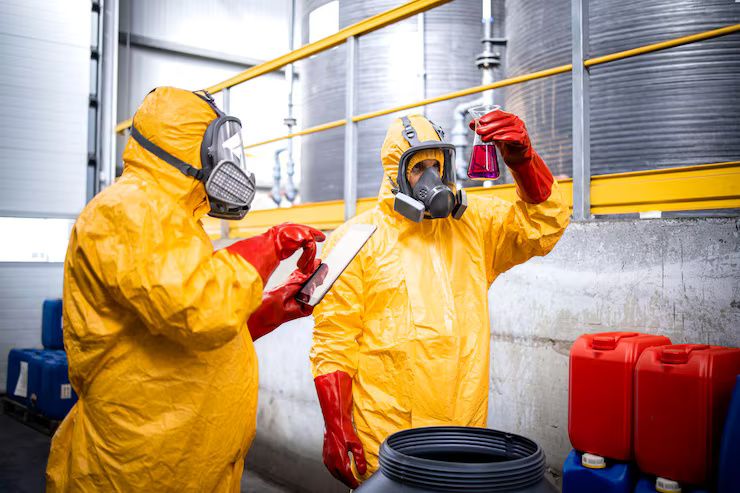
Chemical safety is not limited to wearing protective equipment. It involves the complete lifecycle of a chemical, including identification, storage, transportation within a facility, handling, processing, waste management, emergency preparedness, and disposal. A strong safety program combines technical controls, clear procedures, employee training, monitoring, and continuous improvement.
This guide explains the fundamentals of industrial chemical safety, common workplace hazards, the hierarchy of controls, safe handling principles, emergency planning, and ways organizations can develop a stronger safety culture.
What Is Industrial Chemical Safety?
Industrial chemical safety is the systematic approach used to identify, evaluate, control, and monitor risks associated with hazardous substances in industrial environments.
A chemical may present one or several types of hazards. Some substances can affect health through inhalation or skin contact, while others may create physical hazards such as fire, pressure, reactivity, or instability.
Chemical safety programs are designed to answer several important questions:
- What chemicals are present?
- What hazards are associated with them?
- Who may be exposed?
- How can exposure or incidents be prevented?
- What controls are required?
- What should workers do if something goes wrong?
These questions form the foundation of responsible chemical management.
Understanding Common Chemical Hazards
Recognizing the type of hazard is an important first step in controlling risk. Chemical hazards generally fall into several broad categories.
Health Hazards
Some chemicals can affect the body through inhalation, ingestion, skin contact, or eye exposure. Depending on the substance and level of exposure, effects may include irritation, burns, sensitization, respiratory effects, or other health concerns.
The potential impact depends on factors such as toxicity, concentration, exposure duration, and route of exposure.
Flammable Hazards
Certain chemicals can ignite when exposed to an appropriate ignition source. Flammable liquids, gases, vapors, and combustible materials require careful control of ignition sources and suitable storage and handling practices.
Corrosive Hazards
Corrosive substances can damage skin, eyes, metals, and other materials. Appropriate containment, compatible equipment, and suitable protective measures are important when working with corrosive chemicals.
Reactive Hazards
Some chemicals can react dangerously when exposed to incompatible substances, heat, moisture, pressure, or other environmental conditions. Chemical compatibility is therefore an important consideration in storage and processing areas.
Environmental Hazards
Chemical releases can contaminate air, water, or soil. Environmental protection should therefore be considered alongside worker safety when developing chemical management procedures.
The Hierarchy of Controls
One of the most useful concepts in industrial chemical safety is the hierarchy of controls. It prioritizes methods that reduce hazards at their source rather than depending entirely on individual behavior.
Elimination
The safest approach may be to eliminate a hazardous chemical or hazardous process when a suitable alternative exists.
Substitution
Where elimination is not practical, an organization may consider replacing a hazardous substance or process with one presenting lower risk.
Engineering Controls
Engineering controls separate workers from hazards. Examples include enclosed systems, ventilation, containment systems, automated handling, and appropriately designed process equipment.
Administrative Controls
Administrative measures include training, written procedures, restricted access, work scheduling, inspections, and operating instructions.
Personal Protective Equipment
Personal protective equipment, or PPE, provides an additional layer of protection when other controls cannot adequately eliminate exposure.
An effective safety program generally emphasizes higher-level controls first and uses PPE as part of a broader protection strategy.
Safe Chemical Storage
Proper storage helps prevent spills, incompatible reactions, exposure, and other incidents.
Chemical storage areas should be organized according to the properties and compatibility of the substances involved. Containers should be clearly identified, securely closed, and maintained in suitable condition.
Important considerations include:
- Clear labeling
- Appropriate containment
- Chemical compatibility
- Adequate ventilation
- Controlled access
- Separation of incompatible substances
- Suitable environmental conditions
- Routine inspections
Storage arrangements should be based on the specific hazards of the chemicals rather than simply organizing containers alphabetically.
Chemical Handling Procedures
Safe handling begins before a chemical is opened, transferred, or used.
Workers should understand the substance's hazards, required controls, applicable procedures, and emergency measures before beginning work. Appropriate equipment should be available and maintained, and unnecessary exposure should be avoided.
Good chemical handling practices include maintaining clean work areas, minimizing unnecessary transfers, keeping containers properly identified, and following established operating procedures.
Where practical, closed or automated systems can reduce direct worker interaction with hazardous substances.
Safety Data and Chemical Identification
Reliable chemical information is essential for informed decision-making.
Safety Data Sheets, commonly called SDSs, provide important information about chemical hazards, handling precautions, storage considerations, emergency measures, and other safety information.
Workers who may handle or encounter chemicals should know how to access and understand the relevant safety information.
Labels and workplace identification systems also help employees distinguish substances and recognize important hazards before use.
Ventilation and Exposure Control
Airborne chemical exposure can become a significant concern in manufacturing and processing environments.
Ventilation systems may help control airborne contaminants by capturing or removing them from areas where workers could otherwise be exposed. The appropriate ventilation strategy depends on the chemical, process, facility design, and exposure characteristics.
Regular inspection and maintenance of ventilation systems are important because a control is only effective when it performs as intended.
Exposure monitoring may also be appropriate where there is a reasonable concern that workers could encounter hazardous concentrations.
Emergency Preparedness
Even strong preventive controls cannot eliminate every possibility of an incident. Industrial facilities therefore need clear emergency plans.
Emergency planning should address scenarios such as:
- Chemical spills
- Uncontrolled releases
- Fires
- Exposure incidents
- Equipment failures
- Evacuation requirements
- Environmental releases
Workers should understand emergency communication procedures, alarm systems, evacuation routes, reporting requirements, and the responsibilities assigned to trained emergency personnel.
Emergency response procedures should be developed according to the hazards present at the facility and applicable workplace requirements.
Spill Prevention and Response
Preventing chemical releases is generally preferable to relying on cleanup after an incident.
Facilities can reduce spill risks through appropriate container management, secondary containment, equipment inspection, preventive maintenance, and good housekeeping.
If a release occurs, workers should follow the facility's established emergency procedures rather than improvising a response. Only personnel who are properly trained and equipped for the specific situation should perform specialized response activities.
Importance of Chemical Safety Training
Training is a central part of industrial chemical safety because even well-designed controls can fail if workers do not understand how to use them.
Training should be relevant to the employee's actual responsibilities and should address:
- Chemical hazards
- Workplace procedures
- Labeling systems
- Safety information
- Required protective measures
- Exposure prevention
- Emergency procedures
- Incident reporting
Refresher training can help reinforce knowledge when processes, chemicals, equipment, or workplace conditions change.
Building a Strong Chemical Safety Culture
Safety improves when chemical risk management becomes part of normal operations rather than an activity performed only for compliance.
A strong safety culture encourages employees to report unsafe conditions, near misses, damaged containers, equipment problems, and other concerns without hesitation.
Organizations can strengthen this culture through regular inspections, maintenance programs, safety discussions, incident investigations, and continuous review of procedures.
Management commitment is also important. Workers are more likely to follow safety practices when appropriate resources, training, equipment, and time are provided.
Common Chemical Safety Mistakes to Avoid
Several preventable practices can increase chemical risk.
Common examples include:
- Using unidentified containers
- Ignoring damaged packaging
- Storing incompatible substances together
- Relying solely on PPE
- Skipping required training
- Poor housekeeping
- Failing to inspect control systems
- Treating minor releases as unimportant
- Using outdated safety information
- Changing procedures without evaluating the risks
Recognizing these weaknesses can help organizations improve their overall safety management systems.
Frequently Asked Questions
What is the most important principle of industrial chemical safety?
The fundamental principle is to identify hazards before exposure or an incident occurs and then use appropriate controls to eliminate or reduce the associated risks.
Is PPE enough for chemical safety?
PPE is an important protective layer, but it should not normally be the only control. Engineering, substitution, elimination, and administrative measures can provide additional protection.
Why are Safety Data Sheets important?
Safety Data Sheets provide structured information about chemical hazards, handling, storage, emergency measures, and other safety considerations, helping workers make informed decisions.
How can chemical accidents be prevented?
Prevention depends on hazard identification, compatible storage, effective engineering controls, proper procedures, training, equipment maintenance, exposure monitoring where appropriate, and strong emergency preparedness.
Why is chemical safety training important?
Training helps workers understand the hazards associated with their tasks and the procedures and controls established to protect them.
Conclusion
Industrial chemical safety is a comprehensive process that combines hazard identification, risk assessment, engineering controls, safe work procedures, training, emergency preparedness, and continuous improvement. Effective safety management looks beyond individual protective equipment and focuses on controlling hazards as close to their source as reasonably possible.
By understanding chemical properties, maintaining suitable storage and handling practices, using reliable safety information, monitoring workplace controls, and developing a strong safety culture, industrial organizations can create safer and more controlled working environments. Chemical safety is ultimately an ongoing responsibility that requires cooperation between management, workers, engineers, safety professionals, and everyone involved in industrial operations.