
Modern farming depends on a wide range of machines designed to improve field preparation, planting, crop care, harvesting, transportation, and post-harvest handling.
Farm machines have transformed agriculture by reducing repetitive manual work, improving timing, supporting precise operations, and helping farmers manage larger areas more efficiently.
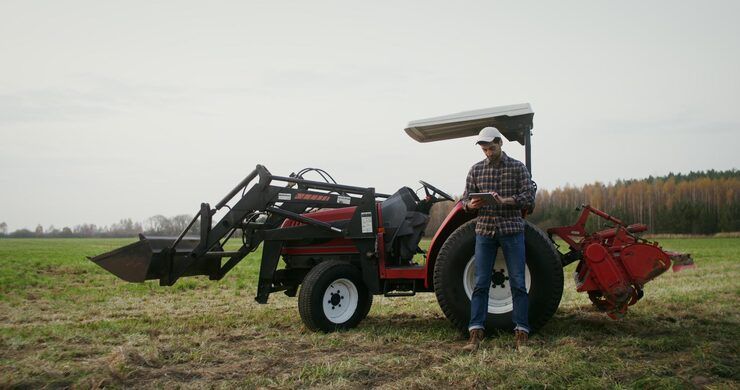
From tractors and seed drills to combine harvesters and irrigation equipment, each machine has a specific role within the agricultural production cycle. Modern equipment is also becoming increasingly connected, with sensors, satellite navigation, automation, and data systems helping farmers make more informed decisions.
This guide explains the major types of farm machines, how they are used, their key features, and the technologies shaping modern agricultural equipment.
What Are Farm Machines?
Farm machines are mechanical or electronically controlled equipment used to perform agricultural tasks. They range from relatively simple implements attached to tractors to highly automated machines capable of performing complex field operations.
The primary purpose of agricultural machinery is to make farming activities more consistent, timely, and manageable. Equipment selection depends on factors such as farm size, soil conditions, crop type, terrain, climate, available infrastructure, and the specific operation being performed.
Common categories include:
- Tractors
- Tillage equipment
- Planting and seeding machines
- Irrigation equipment
- Crop protection machinery
- Harvesting machines
- Material-handling equipment
- Post-harvest processing equipment
Understanding how these categories work together provides a clearer picture of modern agricultural operations.
Tractors: The Foundation of Agricultural Machinery
Tractors are among the most versatile machines used in farming. They provide power for pulling, lifting, operating, and transporting agricultural implements.
Different tractor configurations are designed for different applications. Compact tractors can support smaller agricultural operations, while larger models are suited to extensive fieldwork.
Important tractor characteristics include engine output, traction, hydraulic capacity, transmission type, attachment compatibility, and maneuverability.
Modern tractors increasingly incorporate digital displays, satellite navigation, automated steering, telematics, and sensors. These technologies can help operators monitor machine performance and maintain more consistent field operations.
Soil Preparation and Tillage Equipment
Preparing soil before planting creates suitable conditions for seeds to establish and crops to develop.
Tillage equipment includes several types of implements, each designed for different soil-management objectives.
Plows
Plows are used to turn or loosen soil and incorporate crop residues into the soil profile. Their application depends on soil characteristics and the desired cultivation method.
Harrows
Harrows help break soil clods, level fields, and prepare the seedbed following primary tillage.
Cultivators
Cultivators are commonly used for loosening soil and controlling weeds between crop rows. Their configuration can vary according to crop spacing and field conditions.
Modern farming increasingly considers reduced-tillage and conservation practices, making equipment selection an important part of soil-management planning.
Planting and Seeding Machines
Planting at the appropriate depth, spacing, and timing can strongly influence crop establishment.
Seed drills distribute seeds in relatively consistent rows and depths. Precision planters can provide more controlled seed placement and spacing, making them particularly useful for crops grown in defined rows.
Modern planting machines may use sensors and electronic controls to monitor seed flow and detect irregularities. Some systems can adjust planting parameters according to field conditions or digital prescription maps.
This combination of mechanical equipment and precision agriculture helps farmers manage field variability more effectively.
Irrigation and Water Management Equipment
Water management is an essential component of crop production, particularly in regions where rainfall is variable.
Agricultural irrigation equipment includes pumps, pipes, sprinklers, drip systems, center pivots, valves, filters, and automated controllers.
Drip irrigation delivers water close to plant roots, while sprinkler systems distribute water over larger areas. Center-pivot systems can provide controlled irrigation across extensive fields.
Modern systems may incorporate soil-moisture sensors, weather information, flow meters, and automated controls to improve irrigation scheduling.
Efficient water management can help reduce unnecessary water use while maintaining suitable moisture conditions for crops.
Crop Protection Machinery
Crop protection equipment is used to distribute agricultural inputs across fields in a controlled manner.
Sprayers are designed to apply liquid materials, while specialized spreaders distribute granular materials. Modern equipment can use electronic controls, flow monitoring, and satellite positioning to improve application consistency.
Precision application technologies can also help reduce unnecessary overlap and improve coverage.
Proper calibration and responsible handling remain essential because agricultural inputs must be managed according to applicable regulations, crop requirements, environmental conditions, and safety procedures.
Harvesting Machines
Harvesting is one of the most equipment-intensive stages of agricultural production.
Combine harvesters are widely used for crops such as wheat, corn, barley, rice, and other grains. A combine generally performs several operations within one machine, including cutting, threshing, separating, and cleaning.
Other specialized harvesting machines include forage harvesters, potato harvesters, cotton pickers, grape harvesters, and sugarcane harvesters.
Modern harvesting equipment increasingly uses sensors to monitor crop flow, grain loss, moisture, machine performance, and field productivity. Operators can use this information to make adjustments while harvesting.
Material Handling and Transportation Equipment
Moving agricultural materials efficiently is another important part of farm operations.
Equipment such as trailers, loaders, forklifts, conveyors, and specialized transport machines can move harvested crops, seed, feed, equipment, and other materials around farms and processing areas.
Front-end loaders and telehandlers are particularly useful for handling bulk materials. Conveyors can move crops or other agricultural products between different stages of processing.
Efficient material handling reduces unnecessary movement and helps maintain an organized workflow.
Post-Harvest Equipment
Agricultural work does not end when crops leave the field. Post-harvest equipment helps prepare crops for storage, processing, or distribution.
Common examples include:
- Grain dryers
- Grain cleaners
- Sorting machines
- Conveyors
- Storage systems
- Milling equipment
- Crop processing machinery
Grain drying equipment is especially important when harvested crops contain excess moisture. Proper moisture management can help maintain crop quality during storage.
Precision Agriculture and Smart Farm Machines
One of the most significant developments in modern farm machinery is the integration of digital technologies.
Precision agriculture combines machinery with data from satellites, sensors, cameras, field maps, and connected systems.
Modern equipment may support:
- GPS or satellite guidance
- Automated steering
- Variable-rate application
- Machine monitoring
- Yield mapping
- Soil sensing
- Remote equipment monitoring
- Data-based field management
These technologies allow agricultural operations to become more data-driven. Instead of treating every part of a field identically, farmers can identify differences in soil, crop growth, moisture, and productivity.
Electric and Autonomous Agricultural Equipment
Agricultural machinery is also moving toward alternative power systems and greater automation.
Electric equipment is being explored for selected applications where battery capacity and operating conditions are suitable. Smaller autonomous machines are also being developed for tasks such as monitoring, targeted field operations, and repetitive agricultural activities.
Autonomous technology can use cameras, sensors, positioning systems, and onboard computing to navigate agricultural environments. Human supervision remains important, particularly for complex field conditions and safety-critical operations.
Choosing Farm Machines for Different Needs
The appropriate agricultural equipment depends on several practical factors.
Farmers should consider:
- Farm size
- Crop type
- Soil conditions
- Terrain
- Seasonal workload
- Available storage
- Equipment compatibility
- Operator skills
- Maintenance requirements
- Local environmental conditions
A machine designed for extensive grain production may not be suitable for orchards, vegetable farms, vineyards, or small-scale operations.
Compatibility between tractors, implements, harvesting equipment, and digital systems is also important. A well-matched equipment setup can create a smoother workflow across different stages of farming.
Maintenance and Operator Safety
Regular maintenance is essential for keeping agricultural machinery dependable and productive. Inspections should cover components such as tires, belts, hydraulic systems, lubrication points, electrical connections, filters, and safety mechanisms according to manufacturer guidance.
Operators should receive appropriate training and follow established safety procedures. Machines should be shut down and isolated before maintenance activities where required, and protective equipment should be used according to the task and applicable safety requirements.
Safe operation is especially important around rotating components, moving machinery, hydraulic systems, elevated loads, and harvesting equipment.
Future Trends in Farm Machines
The future of agricultural machinery is increasingly connected to automation, data, and sustainability.
Important trends include:
- Autonomous field machines
- Electric and hybrid agricultural equipment
- AI-assisted crop monitoring
- Advanced machine vision
- Robotic harvesting
- Connected farm management platforms
- Precision input application
- Predictive machine maintenance
- Lightweight agricultural equipment
These developments are gradually shifting farming from equipment-centered operations toward integrated systems in which machines, sensors, software, and agricultural data work together.
Frequently Asked Questions
What are the most common farm machines?
Tractors, plows, cultivators, seed drills, planters, irrigation equipment, sprayers, harvesters, loaders, trailers, and post-harvest processing machines are among the most common types.
What is the main purpose of farm machinery?
Farm machinery helps perform agricultural tasks such as soil preparation, planting, irrigation, crop protection, harvesting, transportation, and post-harvest handling with greater consistency and efficiency.
How is technology changing farm machines?
Modern agricultural equipment increasingly uses satellite navigation, sensors, automation, machine vision, telematics, and data systems to support more precise field operations.
Are autonomous machines used in agriculture?
Autonomous and semi-autonomous agricultural machines are being developed and used for selected applications, particularly repetitive field tasks, monitoring, and precision operations.
How should agricultural equipment be maintained?
Maintenance should follow the equipment manufacturer's guidance and include regular inspections, lubrication, cleaning, component checks, safety-system inspections, and timely attention to abnormal machine behavior.
Conclusion
Farm machines form the mechanical foundation of modern agriculture, supporting nearly every stage of crop production from soil preparation to post-harvest handling. Tractors, planters, irrigation systems, crop protection equipment, harvesters, and material-handling machines each perform specialized roles while working together as part of a larger agricultural workflow.
The next generation of farm equipment is becoming increasingly intelligent through automation, sensors, connectivity, precision agriculture, and alternative power technologies. Understanding these developments helps farmers, agricultural professionals, students, and technology researchers better appreciate how modern machinery is changing the way food and agricultural products are produced.
As farming continues to adapt to changing environmental conditions, labor requirements, resource-management challenges, and data-driven practices, farm machines will remain an important part of efficient, precise, and increasingly connected agricultural systems.