Fabric plays an important role in industries ranging from construction and transportation to healthcare, packaging, outdoor products, and technical textiles.
However, untreated fabric may not provide the strength, moisture resistance, flexibility, chemical resistance, or surface performance required for specialized applications. Fabric coating technology addresses these limitations by applying a controlled layer of polymer, rubber, resin, or another functional material to the textile surface.
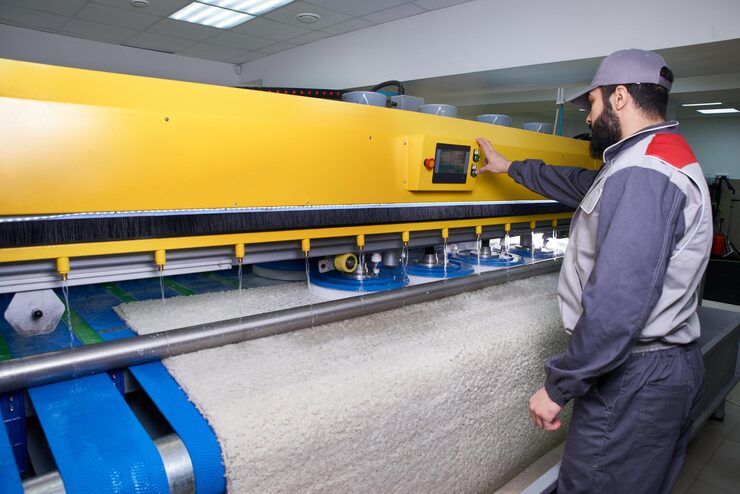
A fabric coating machine is the core equipment used to apply these materials consistently across a fabric web. Depending on the application, the coating process can improve durability, waterproofing, abrasion resistance, appearance, flame performance, or other technical characteristics.
Understanding how a fabric coating machine works requires looking at the complete process, including coating materials, application methods, drying systems, machine components, quality controls, and downstream applications. This guide explains these elements in a practical and easy-to-understand way.
What Is a Fabric Coating Machine?
A fabric coating machine is industrial equipment designed to apply a controlled coating layer onto woven, knitted, nonwoven, or technical textile substrates.
The coating material may be applied to one side or both sides of the fabric. The final coating thickness, penetration, surface finish, and bonding characteristics depend on the material formulation, application method, machine configuration, and processing conditions.
A modern industrial fabric coating machine typically combines several operations into one continuous production system. These may include fabric unwinding, surface preparation, coating application, drying or curing, cooling, inspection, and winding.
The equipment is therefore an important part of a fabric coating production line rather than simply being a standalone coating device.
How a Fabric Coating Machine Works
The exact process varies according to the fabric and coating material, but most continuous systems follow a similar sequence.
Fabric Unwinding
The process begins with a roll of textile material mounted on an unwinding unit. Tension-control systems help maintain consistent fabric movement as the substrate enters the coating section.
Stable tension is important because excessive variation can cause wrinkles, uneven coating thickness, or dimensional instability.
Surface Preparation
The fabric may undergo cleaning, heating, plasma treatment, corona treatment, or other preparation methods depending on the substrate and coating formulation.
The purpose is to improve surface compatibility and create consistent conditions for coating adhesion.
Coating Application
The coating material is then applied using a selected application system. Different technologies are suitable for different viscosities, coating weights, surface finishes, and production requirements.
Common approaches include knife coating, roll coating, dip coating, transfer coating, and specialized extrusion-based methods.
Drying and Curing
After application, the coated fabric usually passes through a controlled drying or curing zone.
Heat, airflow, infrared energy, or combinations of these methods may be used to remove solvents or moisture and develop the required coating properties.
Cooling and Winding
After drying or curing, the material may be cooled before being wound into a finished roll. Controlled winding helps maintain consistent roll quality and makes the coated fabric easier to handle during subsequent processing.
Major Equipment in a Fabric Coating Production Line
A complete fabric coating production line may contain several interconnected units.
Unwinding Unit
The unwinding system feeds fabric into the line while maintaining controlled web tension.
Coating Unit
This is the primary application section. Its configuration depends on the selected coating technology and desired coating characteristics.
Drying or Curing Oven
The drying system removes moisture or volatile components and helps the coating develop its final properties.
Cooling System
Cooling stabilizes the coated material before winding and can help prevent blocking or deformation.
Edge Control System
Edge-guiding equipment keeps the fabric aligned as it moves through the production line.
Inspection System
Visual or automated inspection can identify coating defects, wrinkles, contamination, uneven coverage, and other quality issues.
Winding Unit
The finished material is collected into rolls with controlled tension and alignment.
The combination of these components allows continuous processing with greater consistency than manual coating methods.
Common Fabric Coating Materials
Different coating materials provide different performance characteristics.
PVC
PVC-based coatings are widely used where durability, moisture resistance, and mechanical protection are required. PVC-coated fabrics can be found in products such as industrial covers, membranes, and selected technical textiles.
Polyurethane
Polyurethane coatings can provide flexibility, abrasion resistance, and useful barrier properties. They are used in various apparel, technical textile, and industrial applications.
Acrylic
Acrylic coatings can provide surface protection, weather resistance, and aesthetic characteristics. Their formulation can be adapted to specific textile requirements.
Silicone
Silicone coatings are valued for flexibility, temperature resistance, and specialized performance requirements. They are used in selected high-performance textile applications.
Rubber-Based Coatings
Rubber formulations may be applied when flexibility, resilience, or resistance to particular environmental conditions is required.
Material selection depends on the fabric substrate, intended application, coating thickness, environmental exposure, and required physical properties.
Coating Methods Used in Industrial Textile Processing
Different application technologies produce different coating characteristics.
Knife Coating
Knife coating uses a controlled blade to spread coating material across the fabric. It provides precise control over coating thickness and is widely used in technical textile processing.
Roll Coating
Roll-based systems transfer coating material to the fabric through rotating rollers. They can support continuous production and controlled application.
Dip Coating
In dip coating, the textile passes through a coating bath before excess material is removed and the fabric enters the drying stage.
Transfer Coating
Transfer coating applies the material to an intermediate surface before transferring it onto the textile. This approach can be useful when direct application would be difficult or when a specific surface finish is required.
Factors That Affect Coating Quality
Consistent coating quality depends on several interconnected variables.
Fabric tension is particularly important because variations can influence coating thickness and dimensional accuracy. Coating viscosity also affects how material spreads across the substrate.
Other important factors include:
- Line speed
- Coating gap
- Drying temperature
- Airflow
- Coating formulation
- Fabric surface condition
- Coating thickness
- Curing time
- Environmental conditions
A fabric coating machine manufacturer typically considers these variables when configuring equipment for a specific production requirement.
Applications of Coated Fabrics
Coated textiles are used across many industries because surface coatings can provide specialized performance.
Common applications include:
Construction
Coated fabrics are used in architectural membranes, temporary structures, protective covers, and selected building materials.
Transportation
Automotive interiors, vehicle covers, flexible components, and transportation-related textiles may use coated fabrics for durability and surface protection.
Outdoor Products
Tents, awnings, canopies, protective covers, and outdoor equipment frequently require fabrics with enhanced resistance to moisture and environmental exposure.
Industrial Products
Industrial curtains, flexible barriers, conveyor-related materials, protective covers, and technical components can use coated textiles.
Healthcare and Hygiene
Certain coated textile products are designed for applications requiring controlled surface characteristics, fluid resistance, or ease of cleaning.
What to Consider When Evaluating an Industrial Fabric Coating Machine
Selecting equipment should begin with the production requirements rather than the machine alone.
Important considerations include the type and width of fabric, coating material, required coating thickness, production speed, drying requirements, and desired surface characteristics.
The production environment should also be considered. Space requirements, ventilation, temperature control, material handling, inspection capabilities, and maintenance access can influence the overall suitability of a coating system.
For organizations planning a fabric coating plant, it is useful to evaluate the entire production workflow rather than focusing only on the coating section.
Common Challenges in Fabric Coating
Fabric coating can present several technical challenges.
Uneven coating may result from inconsistent fabric tension, incorrect coating parameters, unsuitable material viscosity, or surface contamination.
Poor adhesion can occur when the coating formulation and textile substrate are incompatible or when surface preparation is insufficient.
Drying problems may produce residual moisture, incomplete curing, surface defects, or changes in coating performance.
Wrinkles and edge irregularities can also affect finished-roll quality. Effective process monitoring and appropriate equipment configuration help reduce these issues.
Future Trends in Fabric Coating Technology
Fabric coating technology continues to develop alongside the growing demand for technical textiles.
Important trends include greater automation, digital process monitoring, improved energy efficiency, precision coating control, and advanced inspection systems.
Manufacturers are also exploring coating formulations designed to reduce environmental impact and improve recyclability. Water-based systems, lower-emission formulations, and more efficient drying technologies are becoming increasingly relevant in textile processing.
Automation is another important development. Sensors and digital controls can monitor coating thickness, web tension, temperature, and production conditions in real time, helping operators maintain consistent processing.
Frequently Asked Questions
What is a fabric coating machine?
A fabric coating machine is industrial equipment used to apply a controlled layer of polymer, resin, rubber, or another coating material to textile substrates.
What materials can be used for fabric coating?
Common materials include PVC, polyurethane, acrylic, silicone, and rubber-based formulations. The appropriate material depends on the required properties and intended application.
What is a fabric coating production line?
A fabric coating production line is an integrated system that may include fabric unwinding, surface preparation, coating application, drying, cooling, inspection, and winding equipment.
What affects the quality of coated fabric?
Fabric tension, coating viscosity, line speed, coating thickness, drying conditions, substrate characteristics, and curing parameters can all influence final quality.
Where are coated fabrics used?
Coated fabrics are used in construction, transportation, outdoor products, industrial equipment, technical textiles, healthcare-related products, and numerous other applications requiring enhanced surface performance.
Conclusion
A fabric coating machine provides controlled and repeatable coating of textile materials for applications where untreated fabric may not provide sufficient performance. From the initial unwinding stage through coating, drying, inspection, and winding, each part of the production process contributes to the quality of the finished material.
Understanding coating materials, application methods, equipment configuration, and process variables makes it easier to evaluate fabric coating technology from a technical perspective. As demand for durable and specialized textiles continues to grow, fabric coating production line technology is also moving toward greater automation, precision, process monitoring, and environmental efficiency.
For anyone studying an industrial fabric coating machine, the most important consideration is not simply how the equipment applies a coating, but how the complete system controls the interaction between fabric, coating material, processing conditions, and final application requirements.